

Myanmar users share identity details, payment data, and device information during registration and verification. That makes privacy rules a practical issue, not a legal footnote. This page explains how 1xBet handles data collection, storage, transfer, and account access for sportsbook and casino activity in Myanmar.
The focus is simple. Players need to know what data is requested, why checks happen, and how MMK transactions are protected. New users need plain guidance. Experienced users need precise details on KYC, payment processing, consent, and account data visibility.
Safeguarding Personal and Financial Information of Myanmar Players
The 1xBet privacy policy explains how the platform collects and protects user data during registration, verification, payments, and account activity. For Myanmar players, this matters during MMK deposits, withdrawals, identity checks, and fraud screening. The policy sets the rules for what information is stored, how it is used, and when extra checks apply.
Types of Personal Data Collected from Myanmar Users
The platform may request identity, contact, and technical data for account operation and verification.
- Full name.
- Residential address.
- Date of birth.
- ID number and scanned identity document.
- Proof of address.
- Facial photo for identity verification.
- IP address.
- Device data.
These records support account creation, age checks, document matching, payment review, and security monitoring. Personal data protection starts with accurate account details. False or mismatched records can delay withdrawals, trigger manual review, or restrict account functions.
Financial Information Safeguarding in MMK Transactions
Payment review is stricter when account activity creates fraud or identity risk. MMK transactions may require basic or expanded KYC, depending on the payment route and account history.
| Verification level | Typical trigger | Documents or checks | Main purpose |
| Basic KYC | First account review, routine deposit activity | Name, date of birth, ID document, address details | Confirm user identity |
| Enhanced KYC | Larger withdrawals, unusual activity, payment mismatch | Proof of address, facial verification, source confirmation, payment instrument review | Prevent fraud and unauthorized use |
| Payment instrument check | Deposit and withdrawal method validation | Screenshot or proof linked to wallet, bank, or card owner | Confirm lawful payment ownership |
| Manual compliance review | Risk flags, duplicate data, inconsistent location signals | Extra document request and transaction explanation | Anti-fraud and AML control |
Financial information security depends on matching the account holder with the payment method. A deposit source may be accepted quickly. A withdrawal often receives closer review. That process helps block account abuse, stolen instruments, and false identity use.
For Myanmar players using MMK, the practical point is clear. The platform may ask for more than one document before payout approval. Safeguarding Myanmar players data also means tracing suspicious transaction patterns before funds move out.
Commitment to Data Protection Under Current Technical Standards
Data processing serves several direct purposes. The first is service delivery. The platform needs user details to register accounts, process bets, settle winnings, and manage payment requests.
The second is age verification. Gambling services cannot lawfully operate without confirming that a player meets the minimum age requirement. Date of birth, identity records, and document scans support that control.
The third is anti-money laundering screening. Transaction review helps detect unusual patterns, false names, linked accounts, or payment tools controlled by another person. This supports financial information security and reduces exposure to illegal fund movement.
The fourth is fraud prevention. Device signals, IP data, and identity matching can show whether the same person is opening multiple accounts or attempting unauthorized access. That layer strengthens personal data protection and supports safer account operation.
Why This Matters for Myanmar Players
Myanmar users often rely on mobile access, rapid wallet transfers, and local banking channels. That raises privacy concerns during registration and payouts. A clear policy reduces guesswork.
New players benefit from knowing why documents are requested. Verification is not only an internal formality. It protects balances, confirms payment ownership, and limits account theft.
Experienced users usually look at processing depth. They want to know how long records are reviewed, why a transfer is paused, and when a third party receives transaction data. The policy answers those points through rules on data use, storage, and disclosure.
In Myanmar’s digital setting, users also face variable network security and shared-device risks. Safeguarding Myanmar players data becomes more important when accounts are accessed from mobile browsers, public Wi-Fi, or recycled phone numbers.
GDPR principles and applicable legal standards support the structure of these controls. That framework strengthens personal data protection, financial information security, and lawful processing for local users.
Secure Data Handling Within Myanmar’s Digital and Banking Environment
The 1xBet privacy policy sets the technical basis for secure use in Myanmar’s online and banking setting. Local users need clarity on data transmission, storage, and payment routing. That includes MMK deposits, withdrawals, and information shared with processors or banks during transaction handling.
Encryption and Storage Technologies Used
Current technical safeguards described for user data handling include:
- Data storage in an encrypted and password-protected database.
- Operation within a secure network behind an up-to-date firewall.
- SSL Version 3 support with 128-bit encryption.
- Security measures applied by partners and service providers involved in data processing.
These controls aim to reduce interception, unauthorized access, and misuse during account operation and payment processing. Secure data handling in Myanmar banking starts with protected storage, but it also depends on each connected payment partner.
Integration with Myanmar Digital Banking
Local payment compatibility matters because users often move funds through banks, e-wallet routes, and mobile-linked financial systems.
| Payment route in Myanmar | Common use | Data involved | Privacy point |
| Local bank transfer in MMK | Deposit and withdrawal | Account name, transfer details, amount, timestamp | Consent to transfer for transaction handling |
| Mobile-linked banking service | Fast deposits | User identifier, payment reference, device session | Extra review may apply on mismatched data |
| Electronic payment system | Deposit and payout routing | Account credentials, transfer confirmation, risk markers | Third-party processing may be required |
| Manual verification route | Delayed or flagged payment | Identity file, payment proof, account ownership evidence | Used when fraud or mismatch risk appears |
Consent to transfer matters during these operations. Transaction data may move between the platform, payment partners, and banking intermediaries where needed to complete a deposit or withdrawal. That transfer should stay limited to payment execution, compliance checks, and fraud control.
Third-Party Payment Processing Security
The platform may disclose data to third parties when payment execution requires it. That includes processors, banking channels, compliance services, and fraud screening partners. Disclosure should stay tied to a clear operational reason.
Legal requests can also trigger disclosure. A competent authority may require records linked to identity, transactions, or account use. Fraud prevention is another valid reason. Suspicious transfer patterns, inconsistent device signals, or disputed payment ownership can justify deeper checks.
Privacy does not disappear during third-party handling. The stated approach is controlled transfer for necessary functions, not unrestricted distribution. That distinction is central to 1xBet privacy policy for financial protection.
Risks and Protections in Myanmar’s Online Environment
Internet transmission always carries some exposure. No online transfer method offers absolute immunity from interception, routing errors, or endpoint compromise.
Main risk points include:
- Login from public or poorly secured networks.
- Shared devices with saved browser sessions.
- Reused passwords across gambling and banking accounts.
- Fake support messages requesting account or payment details.
- Incorrect recipient details during manual transfer activity.
Practical protections reduce those risks:
- Use a private connection for account access.
- Keep device software updated.
- Check account details before each MMK transaction.
- Avoid saving login data on shared phones.
- Contact official support for data access or payment issues.
Secure data handling in Myanmar banking depends on both platform controls and user behavior. The policy outlines technical safeguards, but account safety also depends on careful login habits, document handling, and payment verification.
User Control Over Personal Information and Account Data Visibility
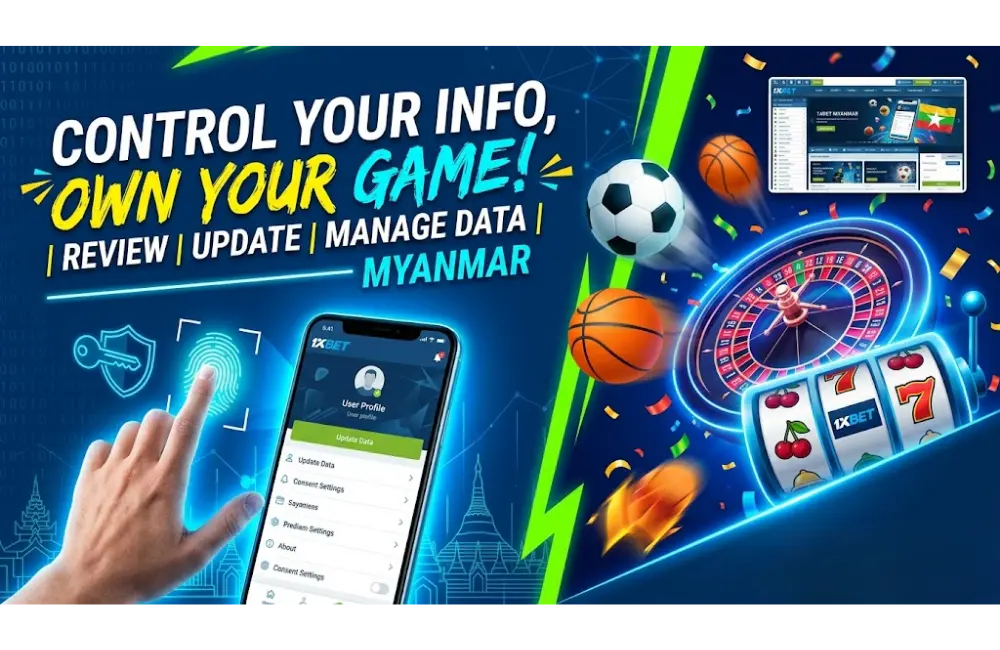
The 1xBet privacy policy gives Myanmar users specific options to review, update, and challenge how their data is used. That matters because privacy control is not limited to registration. Players may need to correct account records, manage consent, or request action on inaccurate information.
Your Rights Under the 1xBet Privacy Policy
Users may rely on several core privacy rights.
- Receive information about collected data.
- Confirm the accuracy of stored information.
- Request updates or corrections.
- Withdraw consent.
- Submit a complaint.
These rights support user control personal data decisions. They also help resolve mismatched KYC records, outdated addresses, and marketing preferences that no longer fit the account holder’s choices.
How to Access and Manage Account Data
Access usually happens through account support channels, identity checks, and direct requests linked to the registered profile.
| Action | How it is usually handled | What the user may need |
| Request account data access | Submit request through support or verified account contact | Account identifier and identity confirmation |
| Correct profile details | Ask support or update allowed fields in account area | Accurate replacement data |
| Confirm document status | Contact support during KYC review | Reference number or upload confirmation |
| Check payment-linked records | Request transaction review | MMK payment proof and account ownership evidence |
| Review visibility or consent settings | Submit privacy or marketing preference request | Verified account access |
Account data visibility in 1xBet privacy policy terms usually means knowing what information is stored, why it is needed, and how to request changes. Identity verification may be required before a request is processed. That step protects the account from unauthorized edits.
Withdrawing Consent and Data Visibility Settings
A user may choose to withdraw consent for certain types of processing, especially marketing communication or optional data use. This does not automatically erase every required record. Some data must remain available for legal compliance, transaction history, fraud review, and account security.
Withdrawal can also affect service access. If a user removes consent tied to essential operational checks, some functions may become limited. That can include payment handling, account verification, or continued access to restricted services.
International data transfer may still apply where payment, storage, or compliance functions involve external partners. Users should read the effect of each request carefully. Data management options are useful, but some requests change how the account can operate.
Practical Tips for Myanmar Users
A few direct habits improve control over account data and privacy outcomes.
- Review account details before sending KYC documents.
- Keep your MMK payment name aligned with account identity.
- Monitor login activity and unusual balance movement.
- Update address and contact data after any change.
- Use support channels for formal privacy requests.
Extra practical points also matter. Save copies of document submissions. Keep payment receipts for deposits and withdrawals. Check whether a rejected payout was caused by a name mismatch, expired ID, or missing proof of address.
Active use of privacy tools gives users more control over visibility, correction requests, and consent settings. That improves account reliability and reduces delays during verification or transaction review.
Conclusion
The 1xBet privacy policy Myanmar section explains three core issues. It shows what data is collected, how MMK transaction records are reviewed, and what privacy controls users can exercise. Myanmar players can expect identity checks, payment ownership review, protected storage, and limited third-party disclosure tied to operational needs. They can also request access, corrections, and consent changes through verified channels. This structure supports personal data protection, financial information security, and safer account use in sportsbook and casino activity. For local users, the value is practical: clearer rules, stronger fraud control, and better visibility over personal information.